The 36th Annual Meeting of the German Society of Human Genetics brought together leading clinicians, researchers, and geneticists from across Europe and beyond. Held at the Munich Science Congress Center, GfH 2026 was an exceptional opportunity to exchange ideas at the forefront of human genetics, and we were proud to be part of it as a sponsor.
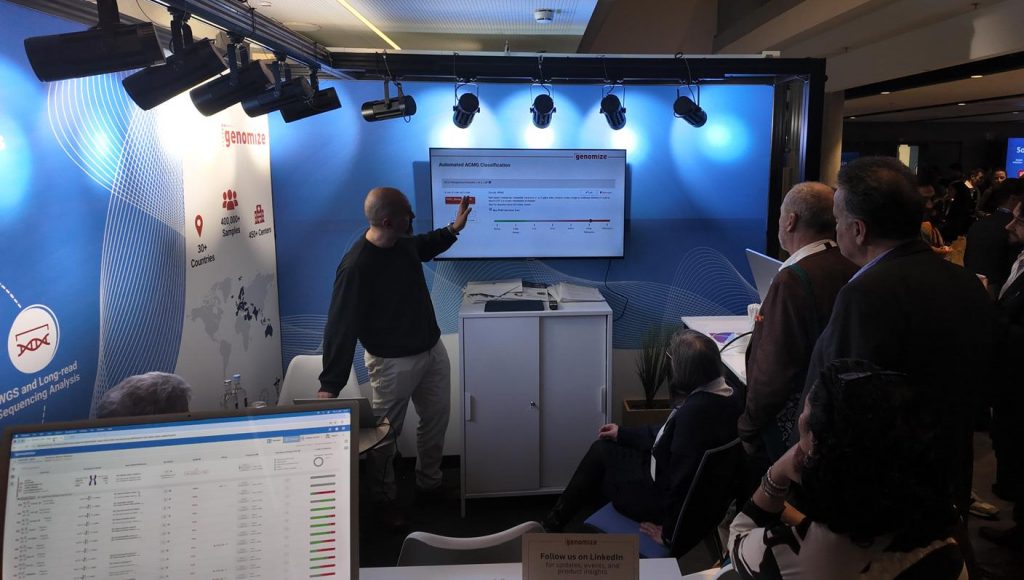
Over three days, our team welcomed visitors at our booth, ran live demo sessions showcasing the SEQ Platform’s intuitive user interface, and engaged in in-depth conversations about clinical genomics workflows covering both germline interpretation and somatic analysis.
Satellite Talk: Discrepancies Between Automated ACMG Classifications in Clinical Bioinformatics
One of the highlights of our participation was the satellite talk delivered by our CEO, Dr. Ersen Kavak, on the first day of the conference.
Key points covered in the talk included:
- A direct benchmarking comparison of the SEQ Platform against competing tools, using the ClinGen Expert Panel’s curated dataset to evaluate F1 scores, precision, and recall.
- Results showing that the SEQ Platform’s classifier consistently outperformed both tools in F1 score, underscoring how differences in rule implementation and database dependency directly affect classification reliability.
- How robust variant prioritization supports more accurate and efficient interpretation across diverse case types.
- The role of data aggregation from over 120 databases in strengthening the evidence base behind each classification.
- How real-time genotype-phenotype association contributes to more confident and consistent variant interpretation in clinical workflows.
The talk generated considerable interest among attendees, with several visiting our booth afterward to discuss the SEQ Platform’s classification approach in more detail.
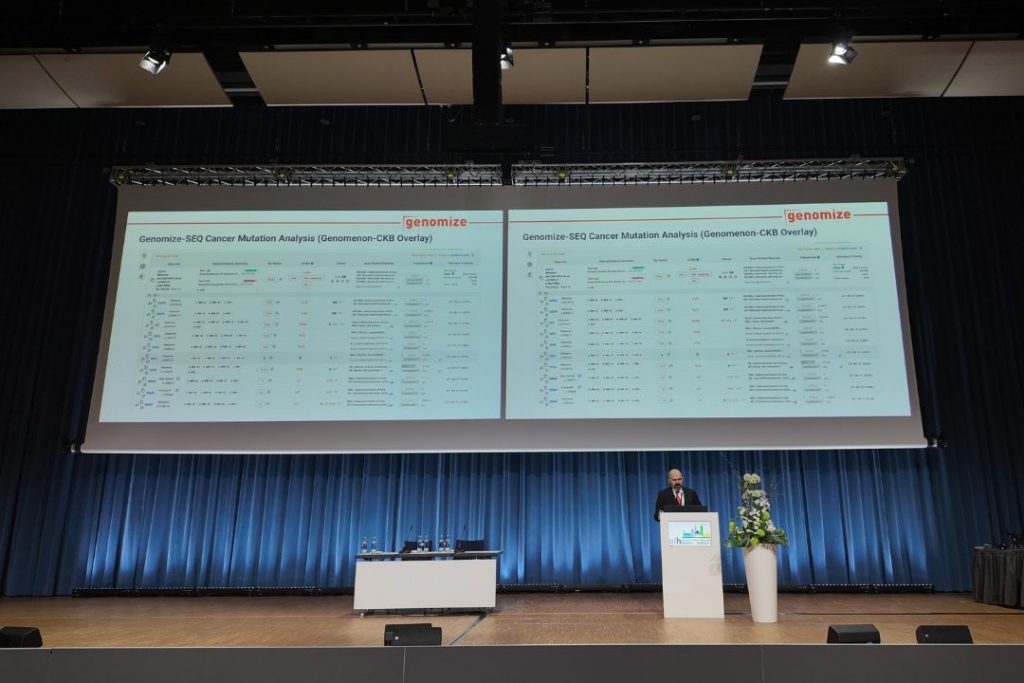
The results demonstrated that the SEQ Platform's classifier consistently outperformed both tools in F1 score, underscoring how differences in rule implementation and database dependency directly affect the reliability of automated classifications in clinical practice.

The talk also covered how robust variant prioritization, data aggregation from over 120 databases, and real-time genotype-phenotype association contribute to more confident and consistent variant interpretation in clinical workflows.

We look forward to continuing these conversations and to seeing the community again at GfH 2027.