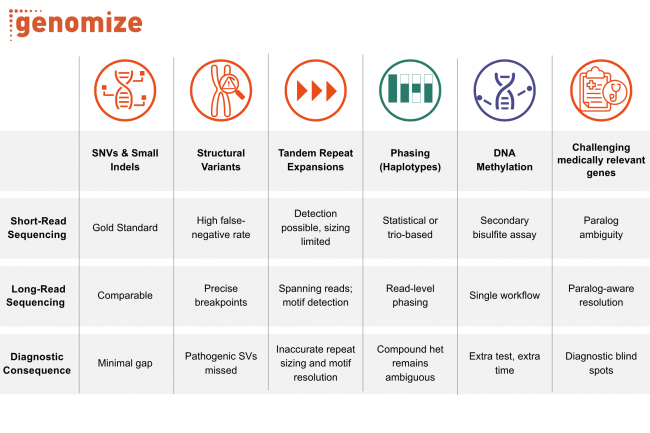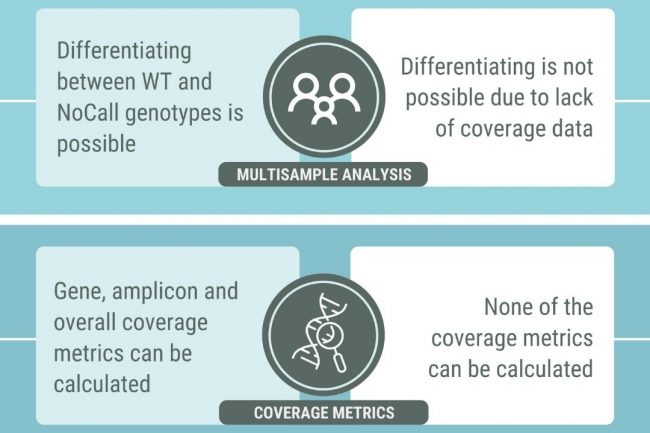
Comparative infographic showing the strengths and limitations of short-read and long-read sequencing technologies across six genomic analysis categories: SNVs and small indels, structural variants, tandem repeat expansions, phasing (haplotypes), DNA methylation, and challenging medically relevant genes. The table outlines how short-read sequencing may face limitations such as false negatives, limited repeat sizing, trio-based phasing requirements, and paralog ambiguity, while long-read sequencing enables precise breakpoint detection, motif detection, read-level phasing, single-workflow methylation analysis, and paralog-aware resolution. A final row summarizes the diagnostic consequences associated with each limitation.

Closing the Diagnostic Gap: What Long-Read Sequencing Adds in Rare Disease

“While short-read sequencing has provided the foundation for modern genetics, its inherent blind spots in repetitive and structural regions present a clear ceiling in a first-line diagnostic setting. Long-read sequencing represents a necessary evolution beyond second-line testing, providing a more comprehensive, phased, and epigenetically aware view of the human genome. The maturation of interpretation platforms…

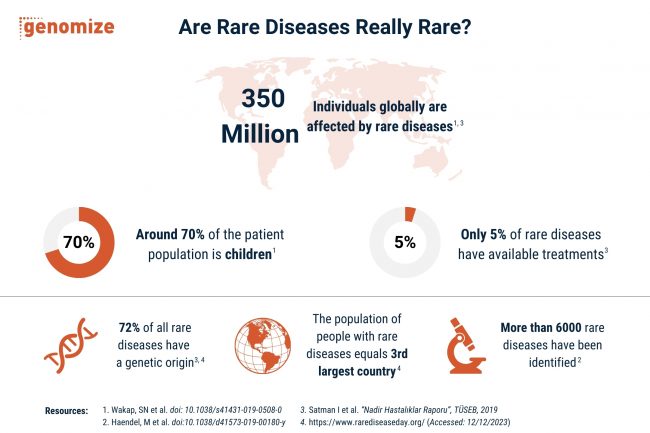
"Rare diseases'' may seem straightforward, affecting a small percentage of the population, although definitions of rarity differ globally. For instance, the U.S. defines these diseases as affecting fewer than 200,000 people, while the EU uses a prevalence criterion of fewer than 1 in 2,000. Additionally, rarity can be context-specific, varying across demographics and regions, emphasizing the intricate nature of these conditions.​

Are Rare Diseases Really Rare?

Rare diseases” may seem straightforward, affecting a small percentage of the population, although definitions of rarity differ globally. For instance, the U.S. defines rare diseases as affecting fewer than 200,000 people, while the EU uses a prevalence criterion of fewer than 1 in 2,000. Additionally, rarity can be context-specific, varying across demographics and regions, emphasizing the intricate nature of these conditions.