Thank you for your application!

Thank you! You are here: Home Your submission was successful We’re thrilled to have received your application! Thank you for your interest in joining us. At Genomize, we are dedicated to providing our teammates with a supportive and stimulating work environment that encourages creativity, growth, and professional development.    We’ll review your application promptly and…

Details

Orange document icon with pencil

A Novel Homozygous Germline Mutation in Transferrin Receptor 1 (TfR1) Leads to Combined Immunodeficiency and Provides New Insights into Iron-Immunity Axis

Aba et al. (2024) used Genomize-SEQ to identify a novel homozygous TFRC mutation in a Turkish CID patient, only the second known disease-causing variant in this gene, uncovering how defective cellular iron uptake broadly disrupts lymphocyte function and immune homeostasis.

Details
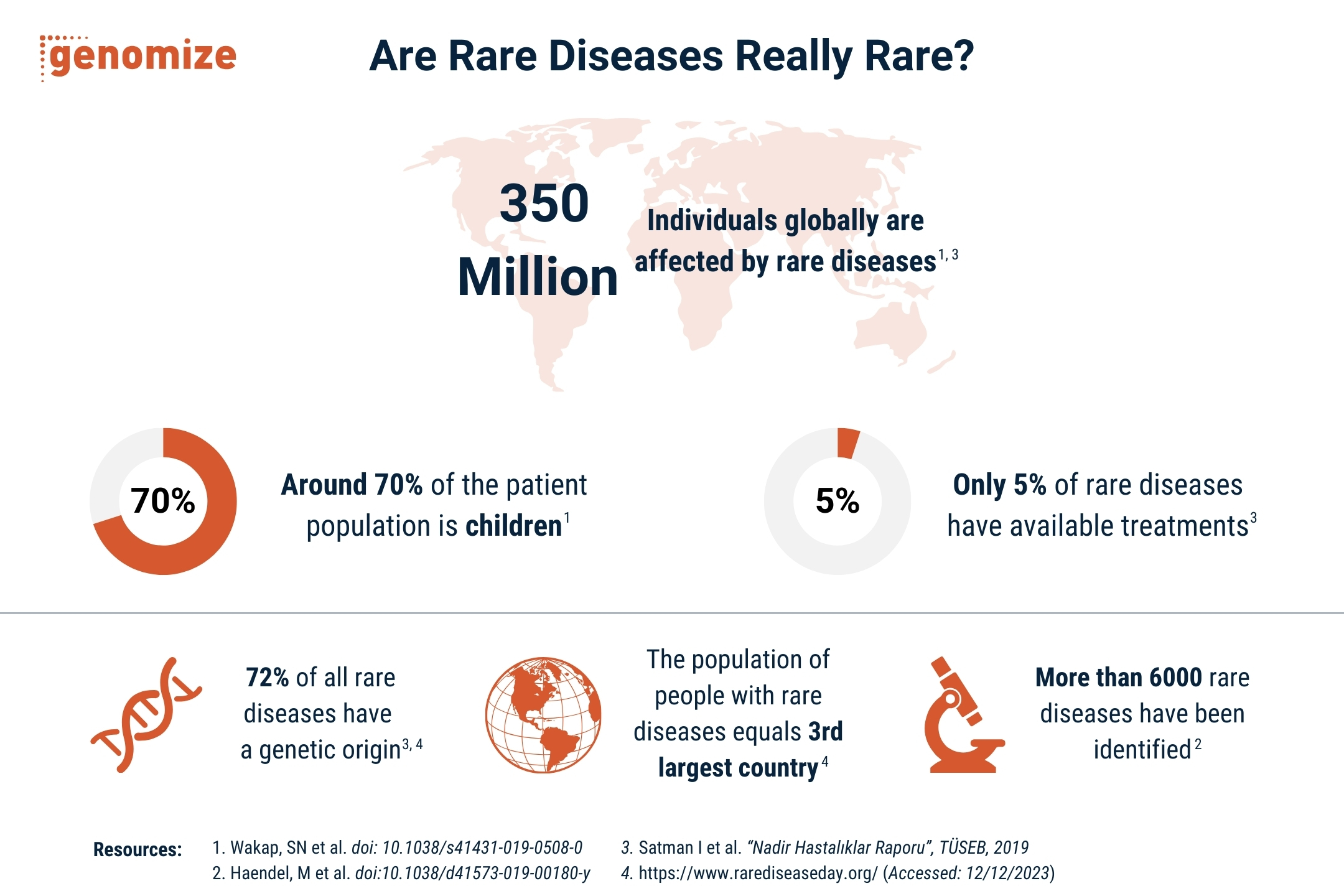
"Rare diseases'' may seem straightforward, affecting a small percentage of the population, although definitions of rarity differ globally. For instance, the U.S. defines these diseases as affecting fewer than 200,000 people, while the EU uses a prevalence criterion of fewer than 1 in 2,000. Additionally, rarity can be context-specific, varying across demographics and regions, emphasizing the intricate nature of these conditions.​

Are Rare Diseases Really Rare?

Rare diseases” may seem straightforward, affecting a small percentage of the population, although definitions of rarity differ globally. For instance, the U.S. defines rare diseases as affecting fewer than 200,000 people, while the EU uses a prevalence criterion of fewer than 1 in 2,000. Additionally, rarity can be context-specific, varying across demographics and regions, emphasizing the intricate nature of these conditions.

Details

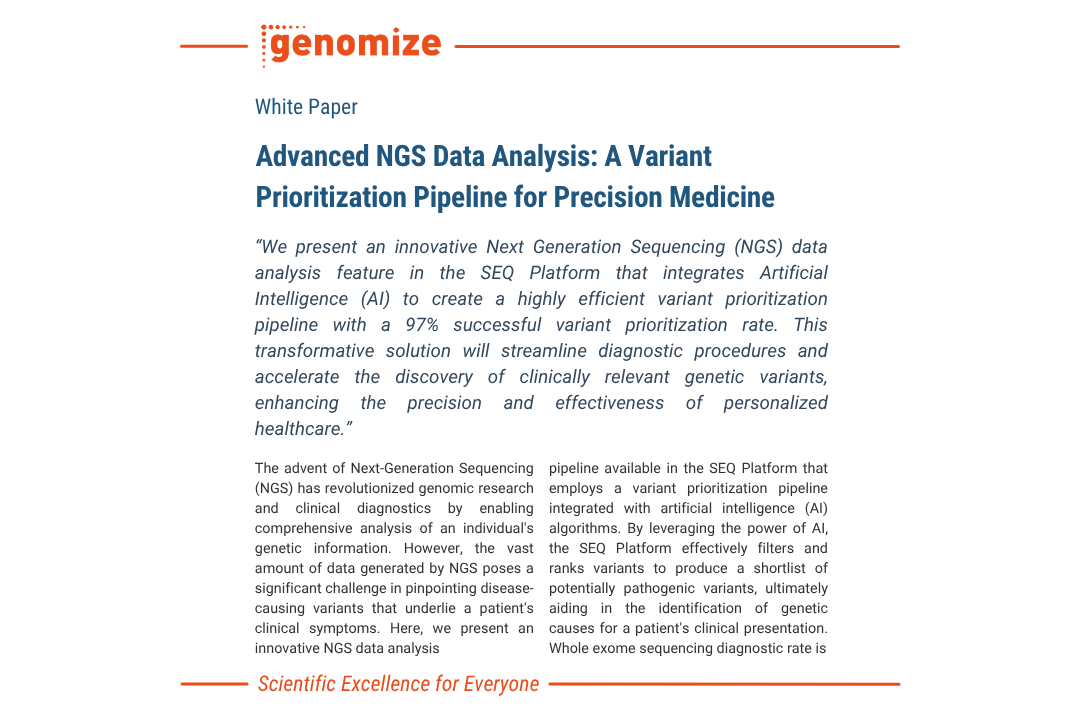
SEQ Platform’s Variant Prioritization Pipeline for Precision Medicine

“We present an innovative Next Generation Sequencing (NGS) data analysis feature in the SEQ Platform that integrates an advanced algorithm to create a highly efficient variant prioritization pipeline with a 97% successful variant prioritization rate. This transformative solution will streamline diagnostic procedures and accelerate the discovery of clinically relevant genetic variants, enhancing the precision and…

Details

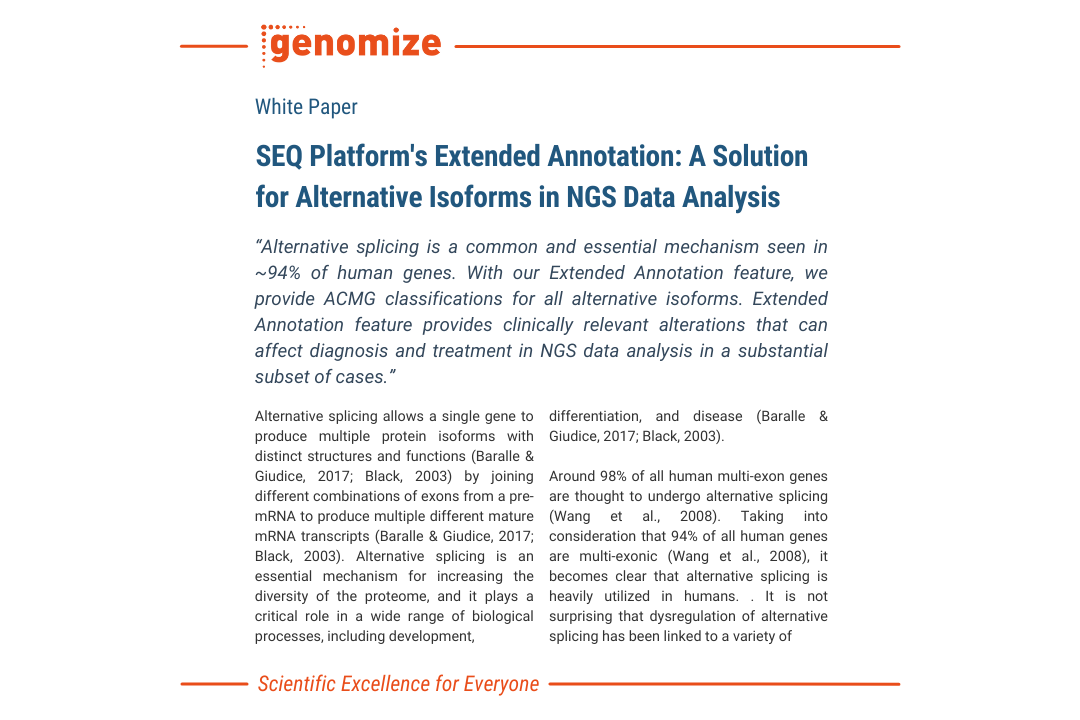
SEQ Platforms’s Extended Annotation: A Solution for Alternative Isoforms in NGS Data Analysis

“Alternative splicing is a common and essential mechanism seen in ~94% of human genes. With our Extended Annotation feature, we provide ACMG classifications for all alternative isoforms. Extended Annotation feature provides clinically relevant alterations that can affect diagnosis and treatment in NGS data analysis.” Alternative splicing allows a single gene to produce multiple protein isoforms…

Details