

Four Turkish families with hyperekplexia: A missense mutation and the exon 1–7 deletion in the GLRA1 gene
Didem Tezen, Gülşah Şimşir, Özlem Çokar, Veysi Demirbilek, A. Nazlı Başak, and Zuhal Yapıcı
Details
Didem Tezen, Gülşah Şimşir, Özlem Çokar, Veysi Demirbilek, A. Nazlı Başak, and Zuhal Yapıcı
Details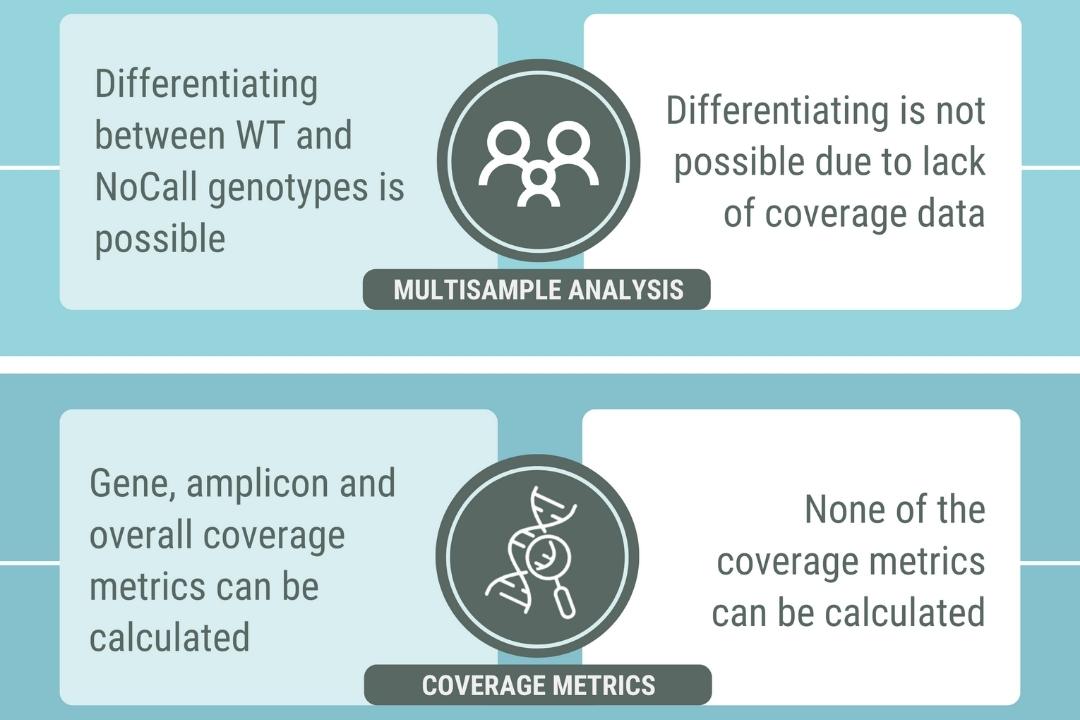
Get insight about why FastQ file format is a superior starting point for clinical NGS data analysis compared to VCF. Take a look at the advantages of using raw sequencing data, including data completeness, customizable analysis, and the ability to detect novel genetic variants crucial in clinical contexts.
Details
Seven Menevse et al. (2022) investigated the molecular etiology of non-CAH primary adrenal insufficiency in a multicenter Turkish pediatric cohort, identifying 8 novel variants across 11 genes and demonstrating that specific steroid hormone thresholds offer >95% diagnostic specificity for this condition.
Details
Erdoğan et al. (2021) used Genomize-SEQ to analyze CFTR mutations in 316 CF patients from Central Anatolia. They genetically diagnosed 215 patients and uncovered 7 novel variants, expanding the regional mutation map to support more accurate CF screening in Turkey.
Details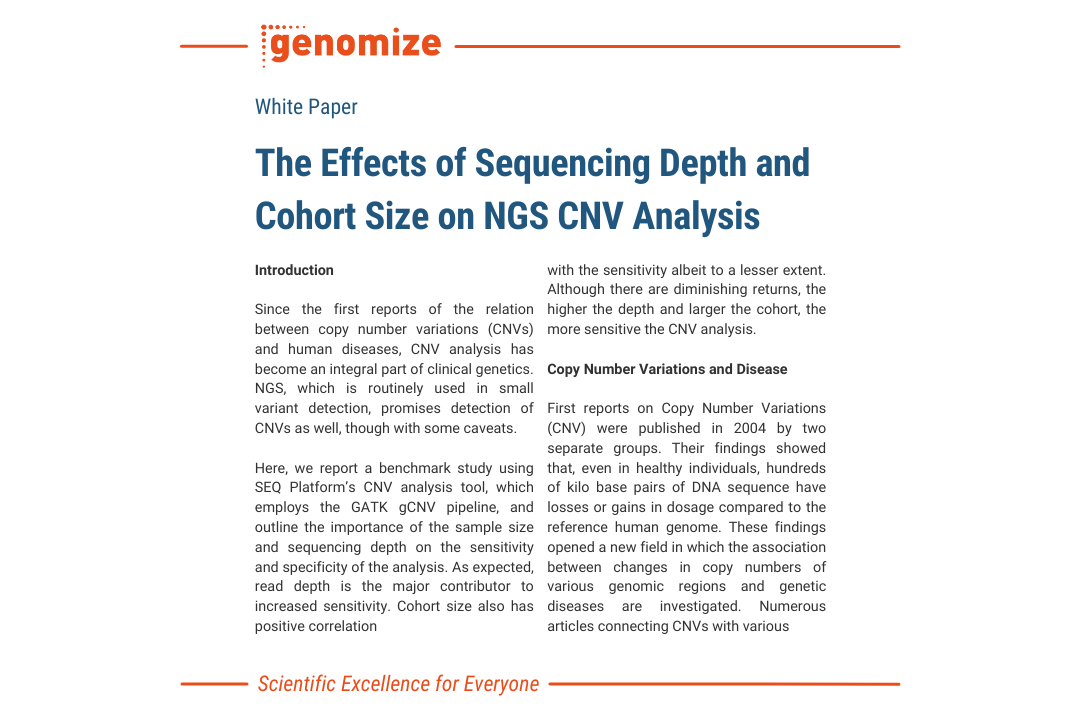
Delve into the impact of sequencing depth and cohort size on NGS CNV analysis, exploring the relationship between these factors and the sensitivity and specificity of detecting copy number variations in genetic studies.
Details
Tunca et al. (2020) used Genomize-SEQ to analyze whole-exome sequencing data from 1,200 Turkish ALS patients. They revealed that established ALS genes explain only 35% of familial cases, far fewer than in Western cohorts, highlighting the distinct genetic landscape of ALS in Turkey.
Details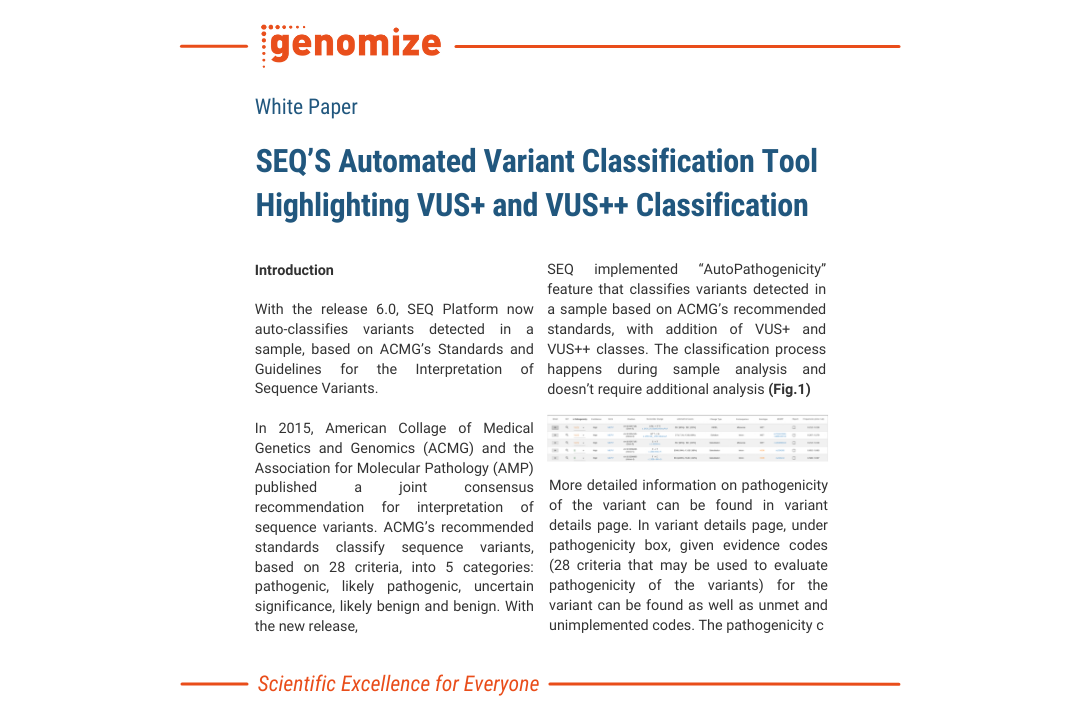
Discover SEQ’s Automated Variant Classification Tool, which incorporates ACMG’s Standards and Guidelines, and learn how the additional VUS+ and VUS++ classifications can improve variant interpretation and prioritization.
Details
Türkdoğan et al. (2019) identified a pathogenic SCN4A myotonia mutation through Genomize-SEQ whole-exome variant analysis in an infant with epileptic seizures and apneas, proposing the mutation caused laryngospasm as a potential contributing mechanism for SUDEP
Details
Hangül et al. (2019) applied Genomize-SEQ for CFTR variant analysis across 119,006 newborns in central Anatolia, establishing a CF incidence of 1 in 3,400 live births, the first Turkish estimate from national newborn screening.
Details
Forouhideh et al. (2019) confirmed MYORG as the first known recessive gene for primary familial brain calcification (Fahr’s syndrome) in a consanguineous Turkish family, providing the first case reported outside China with detailed phenotyping.
Details